Introduction
Hey there, fellow adventurers! Blaziker has returned for another essay, and today, it is time we settle some loose ends because two years after I released this essay, it is time we return to this topic about the Americanisation of Non-Mainstream Animated Movies.
Two years ago, I wrote an essay complaining about how a good number of non-mainstream animated movies seem to only follow trends set by other animated movies, playing it too safe and generic, just pigeon-holing to its children audience and worst of all, being of low quality schtick that is an injustice to how amazing the theatrical animation scene is. I also discussed ways some of these better animated movies circumvent the many mistakes those Americanised non-mainstream animated movies made to showcase that not all of them are bad, only most of them.
With the animation landscape changing for the better, especially with the increased prominence of non-mainstream animated movies, perhaps it is time I do a follow-up on this essay and discuss on how the non-mainstream animation industry are moving away from following the same old Americanisation trends, and are instead forging ahead with more exciting and original animated movies that are challenging the status quo. Yes, the Americanisated non-mainstream animated movies still exist, but now we have more top-quality non-mainstream animated movies than ever before.
With that said, let’s get on to this essay, shall we?
The Bad News First…

Before we get to how the non-mainstream animation industry has flourished despite the existence of Americanisd non-mainstream animated movies, I got bad news: they still exist.
Now, now, before you despair over the future of the non-mainstream animation industry, I need to remind everyone that, as do my previous essay about this topic, these types of animated movies will continue to exist and honestly, I am ok with that. After all, these Americanised non-mainstream animated movies need to exist to cater to a certain type of family audience, and yeah, most are just not good enough for animation fans like me.
In the past, my main reason for covering those Americanised non-mainstream animated movies were that I cared a lot about the family audiences and since there is a demand for these types of animated movies, someone has to review those movies to give the intended audience an informed choice. The secondary reason was that I grew up with more Americanised non-mainstream animated movies than humanly possible, so I can tolerate a lot of these movies. However, times have changed, and after expanding my horizons to cover more great non-mainstream animated movies, I realised I need to change my way of covering them because, simply put, most of them are just not good.
As I will say, whenever I cover these types of animated movies, I normally judge them from the perspective of the target audience and evaluate whether the typical family audiences will enjoy it, and if they don’t, then these Americanised animated movies that are only there as babysitting instead of genuinely entertaining the kids, then these movies are not doing their job properly. With that said, even though I had been well known for covering these types of animated movies regularly, I am now moving away from reviewing these animated movies regularly, and only cover them if:
- These movies have interesting concepts (whether in story or animation) that at least stand out compared to the typical Americanised non-mainstream animated movies;
- They are getting surprisingly good reviews and ratings from the movie community (especially if my friends had recommended them); or
- I had a gut feeling these movies might actually be good due to the studios or directors behind them, be it an animation studio that has a good track record or a director that has directed a past animated movie that I enjoyed…
- Or maybe because Viva Kids is distributing that said movie, and you know I cared a damn lot about the unhinged American animated movie distributor (as long as these animated movies fit any of the above criteria, of course)
By being more selective over these animated movies, I can focus my time on the actually great non-mainstream animated movies that deserve more attention rather than getting bored or enraged by the mediocre or terrible Americanised non-mainstream animated movies (though I plan to cover a small handful of them from time to time). Sure, that means losing part of my identity of covering as many animated movies from outside of animation giants, but right now, quality triumphs quantity, and focusing on the select great animated movies hits my vibe. After all, there is no need to cover every single animated movie under the sun if some of them are just gonna take up space, eh?
Ok, bad news out of the way, it’s time to re-focus on how much the non-mainstream animation landscape has changed for the better, and man, I could think of the many ways this landscape evolve, but here are three ways the non-mainstream animation landscape have changed:
Stories that Inspire and Excite the Audience

One of the biggest issues I have with non-mainstream animated movies is the writing, and in that essay, I talked about how most of these not so great non-mainstream animated movies seem to have similar story structure, similar beats, similar concepts and worst of all, poor execution. It is understandable that for most writers, English is not their first language, which explains why writing quality in the past wasn’t great.
However, ever since the essay, that is where I see the biggest improvement, because the writing quality and variety has gotten a huge glow-up, especially from the very best non-mainstream animated movies out there. If I were to be honest, I am not surprised by the improvements made to the writing, but I am surprised that the improvements came very fast!
To explain why there is such an improvement, you have to remember that in the past, back in the 2000s when the big mainstream animation studios, such as Disney, Pixar and DreamWorks, most of the foreign animation studios that have not established themselves at that time were simply playing catch up, and the best way for them to make up for lack of any experience or expertise is to follow those great animated movies. For instance, when Shrek and Finding Nemo were released in theatres at that time, the success of these two greats resulted in many, many Shrek and Finding Nemo imitations that were mostly inferior to the originals.
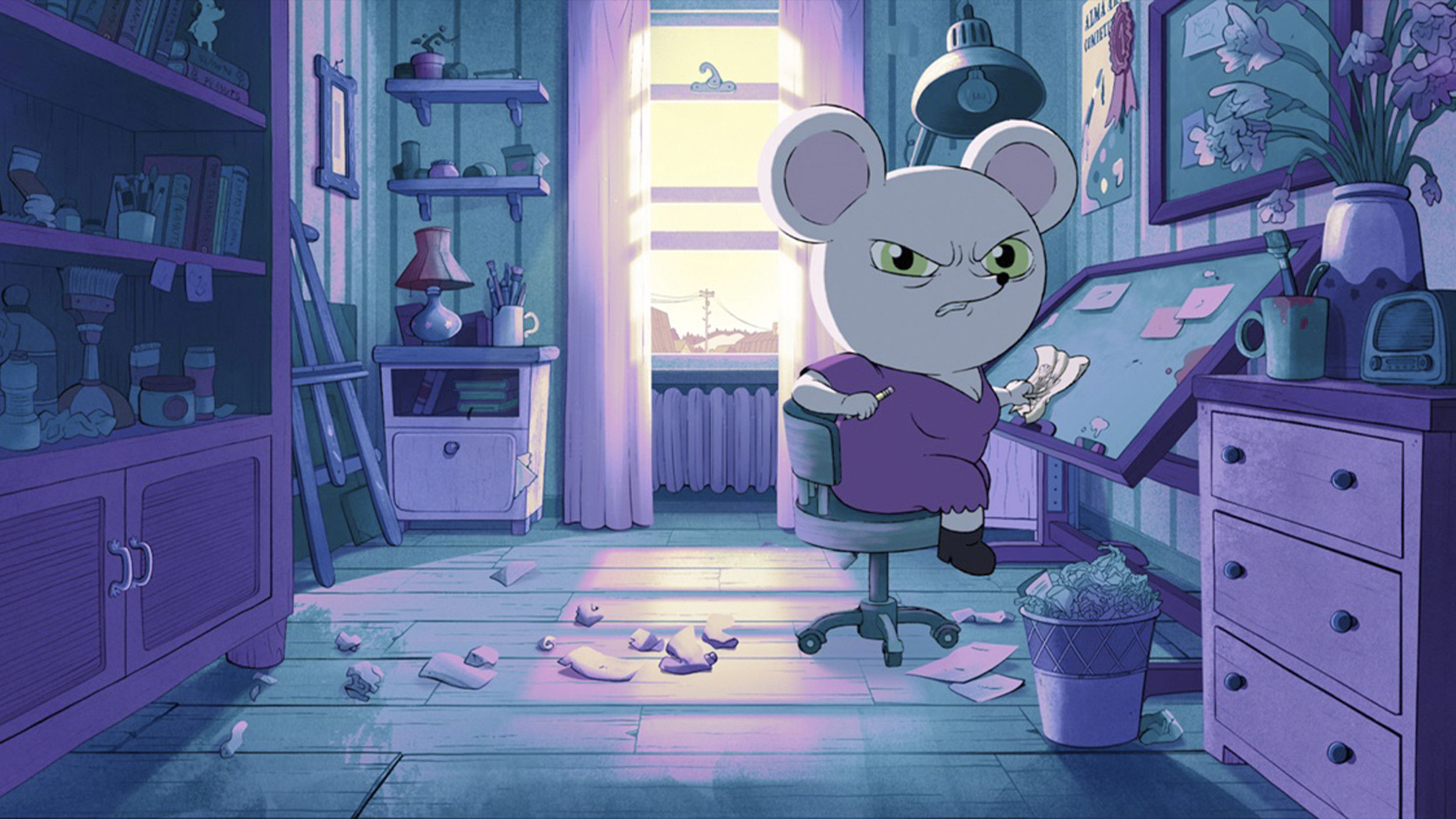
However, as these animation studios continue to develop their own craft, with enough support and manpower, we started seeing some animation studios beginning to move away from the Americanisation style of animated movies when they (correctly) assessed that studio does not suit their identity, so they began writing their new path. Instead of following trends set by the big Hollywood studios, they began crafting stories that are true to their own, whether based on their own experiences or beliefs they strongly advocate. Suddenly, instead of typical comedic adventures, we got stories that go up and beyond, whether it is about a foreign child growing up in Japan (Little Amelie or the Character of Rain), a rebellious child god (the Ne Zha movies), the effects of the Armenian Genocide (Aurora’s Sunrise) or a more brutal adaptation of a children’s folk tale (Dongeng Sang Kancil).
The non-mainstream animation scene evolved in terms of its writing, not just because the stories have become more diverse and interesting, but also because the stories these animated movies tell feel more authentic to themselves. Remember, non-mainstream animated movies in the past lost out simply because they were simply following trends instead of making them; today, the opposite happens, with stories these up and rising studios are telling feeling more true to who they are and what they wanted to achieve, resulting in higher quality stories and screenplays that do more than just distracting or entertaining its children audience at the bare minimum.
Remember the common phrase that animation is for more than just kids? Well, the evolution and maturity of the stories in non-mainstream animated movies is why.
Interesting and Creative Animation that Changes the Game

Another aspect of the non-mainstream animated movies that has changed is of course the animation, and man, I could have dedicated the entire essay to how the animation style and quality has changed, but here, given I had to talk about the improvements in overall writing, hence why I had to keep it succinct when it comes to the animation.
In terms of the animation, while there were not a lot of foreign animation studios with a lot of establishment (except for Japan’s Studio Ghibli and a few others), but there were a handful of animation studios outside of the big markets who produced some very interesting animated movies in the 20th century. However, when the turn of the 21st century came, a majority of the foreign animation studios realised the potential in computer-generated animation, so they switched to that and began trying out that animation style with mostly poor or, at best, lacklustre results. For a while, even though there were still a good number of distinct and better-quality animated movies that did not follow the Americanisation trends, there were unfortunately too many inferior-quality foreign animated movies utilising computer-generated animation to less desirable results.
This trend continued throughout the 2000s and most of the 2010s, until we saw the emergence of a few animators who were seeing where foreign animation was heading and declared, “No, that won’t do.” These creators no longer accept the normalisation of mediocrity in the animation scene, and rather than taking the usual generic computer-generated animation route, they become more creative and began crafting animated movies that utilise a wide variety of animation styles and techniques. Be it 2D hand-drawn animation, stop-motion, roto-scoping and even 3D computer-generated animation (but with better quality and more interesting compared to the generic styles).
Today, thanks to a certain few who do not believe in the system, we are seeing better looking and a wide variety of animation styles in different animated movies across the world, even from countries that do not have established animation industries such as Pakistan (The Glassworker), Dominican Republic (Olivia & the Clouds) and Hong Kong (Another World), among others. In fact, the animation landscape has shifted to where today, more animation studios either embrace new animation styles that suit their identity or improve their craft to create better quality animation in their movies that are more elevated than their previous efforts. That is why we are seeing more animated movies that reject the Americanisation way by innovating their animation and pushing it to the next level.
As a result, the diversity in animation, both in terms of technique and quality, fuelled motivation from not just aspiring animators who wanted to break into the animation industry, but also the animation fanbase who craved something different from the familiar.
That is where the biggest change in the non-mainstream animation scene comes in, rounding up the radical change. It is not the writing quality, not the creative animation, but this third and most important reason…
A Well-Needed Change of Perception of Non-Mainstream Animation

The most important change that helped non-mainstream animation is quite simple: the perception and tastes of animators and animation fans had changed for the better. For this section, I am talking more about animation-centric fans who watched a lot of animated movies (such as me) as well as animators who are working or worked with different animation studios from across the world.
Rather than explaining the point and providing an example as per the previous points, let’s do this in reverse and talk about the Chinese animation scene first. Before the Americanisation of global animation, classic Chinese animation showcased traditional hand-drawn animation and blended it with mythology, creating showpieces that felt like works of art. When the Americanisation trend starts dominating the world, the Chinese animators could only follow suit, and what followed was the devolution of Chinese animation, where the industry churned about imitation after imitation, resulting in the loss of faith and interest in the Chinese animation, being ridiculed as animated movie flop after animated movie flop, Chinese animation was seen as a joke.
However, something had changed during the middle of the 2010s when a Chinese animator named Tang Xiaopeng realised this is not the Chinese animation he envisioned, and together with his studio October Media (and both went on to do even better with 2023’s Deep Sea), they produced the animated movie that began the Chinese animation renaissance with 2015’s Monkey King: Hero is Back. While its critical reviews weren’t the highest grade, its decent box office success would inspire more animators to start producing their own animated movies that are different from the Americanisation way, and soon, the number of good or even great Chinese animated movies gradually increased, and it was when in 2019 when China produced two Chinese animated movie blockbusters with White Snake, from famed Chinese animation giant Light Chaser Animation (who only 3 years ago produced their own dud with their debut flick Guardian Brothers), and an even bigger box office legend with Ne Zha. The staggering box office numbers both movies produced were when the floodgates opened.
Today, as the number of Americanised feeling Chinese animated movies dwindled significantly, so much so that they became only a footnote in Chinese animation history, we have Chinese animated movies that are so amazing, they are even toppling the big Hollywood animation studios. Ne Zha 2, Deep Sea, Nobody, the two I Am What I Am movies, the two Legend of Hei movies, Chang An, Endless Journey of Love and many other amazing Chinese animated movies later, it is safe to say Chinese animation has changed for the better as what Accented Cinema outlined in his essay on the same subject below.
What has changed in Chinese animation that resulted in such a stark improvement in a short amount of time? The main reason: perception and tastes had changed such that the Chinese audience do not want to see the same old imitations that feel tired out; instead, they crave for excitement, maturity and top-quality animation that would make them proud of their animation. That is what has changed for the better in the global animation scene.
In many other countries, including in most parts of Europe where the evolution of animation can be seen anywhere, thanks to increased governmental support to boost their animation industry and a less risk-averse animation industry who are willing to innovate, try different animation styles and techniques and tell their own story that feel authentic to themselves, rather than being commercial products that only serve the youngest of demographics. As a result, the non-mainstream animation industry enjoyed a rise in more mature and adult orientated animated movies, higher quality animation that embraced different animation styles and techniques, and better-feeling animated movies that rejected the Americanisation method. In fact, the way I see it, right now I feel the mainstream animation industry is playing catch-up to the non-mainstream animation industry. Yes, the tide has turned, and now moviegoers cannot ignore the impact that non-mainstream animated movies have left behind.
So yes, the non-mainstream animation industry has changed for the better, and it is because even though we still see the Americanisation of non-mainstream animated movies today, the number of such movies has decreased to a more tolerable level compared to the past when these animated movies flooded the global animation scene to the annoyance of pretty much everyone.
Conclusion

When I wrote my Americanisation essay two years ago, one of my hopes is to showcase the best that non-mainstream animated movies has to offer and that the readers can embrace this interesting subcategory despite it being tainted by the sins of the past.
Today, I am proud to be using this blog to showcase how amazing the non-mainstream animation industry is, and how rejecting the outdated Americanisation formula has resulted in so many fantastic animated movies from outside of the big Hollywood animation industry today. Needless to say, it would be possible to see the Americanisation way of producing animated movies being critically endangered, maybe go extinct, in the coming years, and I would drink to that.
Thank you so much for reading my essay about how the non-mainstream animation industry has changed for the better. Now, let’s get back to more animated movie adventures, shall we? I cannot wait to showcase more of what I explained just now, so… Until next time, see you on the next adventure!

Leave a Reply